By Oma Agbai, MD, FAAD | Board-Certified Dermatologist | NorCal Hair Doctor™
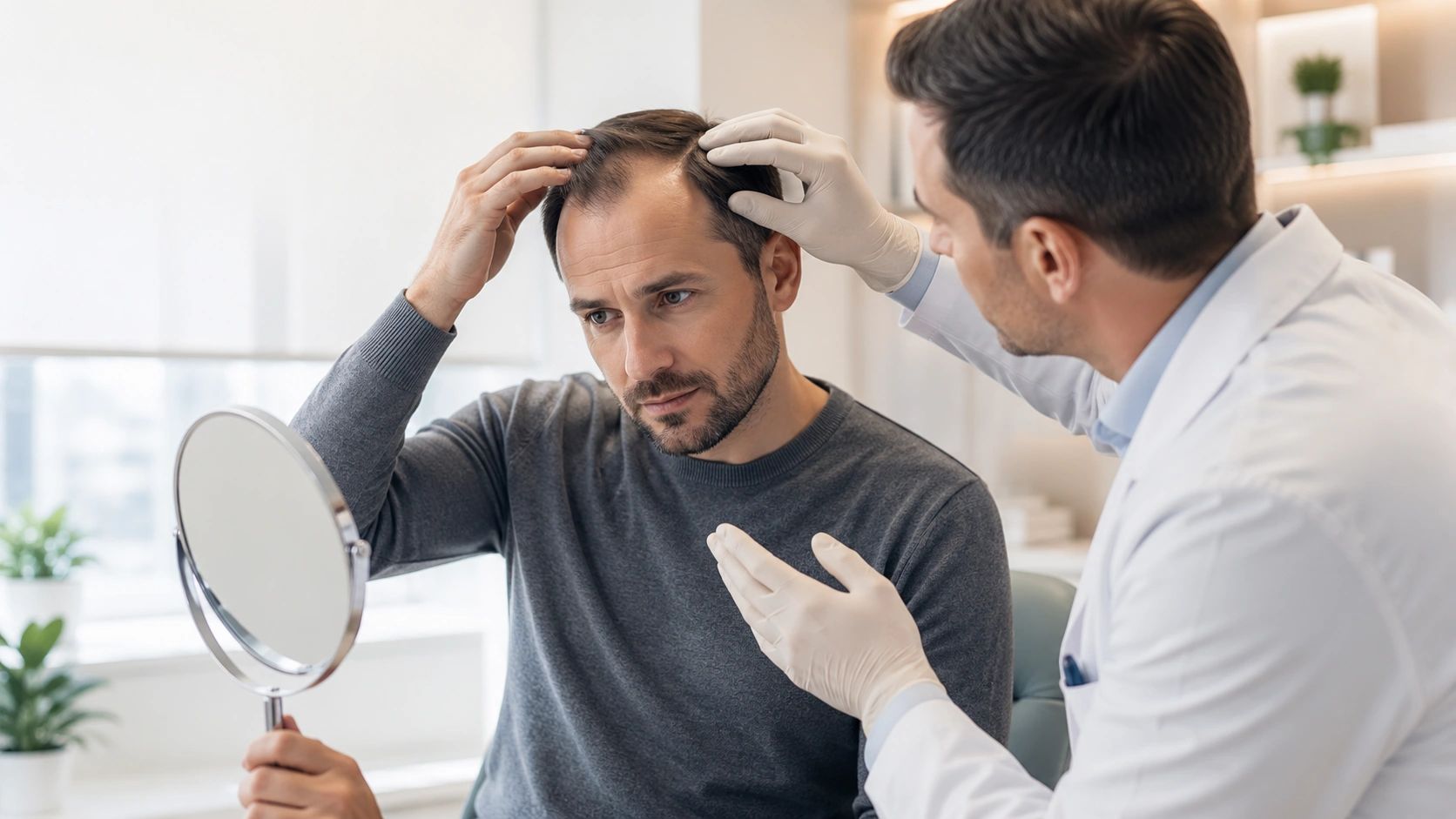
If you're considering a hair transplant, one of the first questions you're probably asking is: "Am I a good candidate for a hair transplant?"
The answer depends on much more than how much hair you've lost. The best hair transplant results begin with an accurate diagnosis. Before discussing surgery, it's essential to identify why you're losing your hair.
At NorCal Hair Doctor™, we believe successful hair restoration starts with understanding the health of your scalp and hair follicles. As a board-certified dermatologist specializing in hair loss disorders and hair transplantation, I evaluate each patient's hair loss pattern, donor hair and underlying medical conditions to determine whether a hair transplant is appropriate, or whether medical treatment should come first.
Simply put, the healthiest scalp creates the best environment for long-lasting hair transplant results.
What makes someone a good candidate for a hair transplant?
The ideal candidate typically has:
stable hair loss
healthy donor hair on the back and sides of the scalp
realistic expectations about achievable density
good overall health
a scalp free of active inflammation
Hair transplantation works by relocating healthy hair follicles from the donor area to areas of thinning or baldness. Because these follicles are genetically resistant to pattern hair loss, they typically continue growing for many years after transplantation.
Hair loss conditions that can be successfully treated with hair transplantation
Androgenetic Alopecia (Male and Female Pattern Hair Loss)
The most common reason patients seek hair transplantation is androgenetic alopecia, also known as male or female pattern hair loss.
Men often notice a receding hairline or thinning at the crown, while women commonly experience widening of the part or diffuse thinning over the top of the scalp.
For many patients, hair transplantation provides natural, long-lasting restoration when combined with medical therapies designed to preserve existing hair and slow future hair loss.
Scarring alopecias
Patients with scarring alopecias—including Central Centrifugal Cicatricial Alopecia (CCCA), Frontal Fibrosing Alopecia (FFA) and Lichen Planopilaris (LPP)—may be candidates for hair transplantation, but careful timing is essential.
These conditions cause inflammation that permanently destroys hair follicles. If a hair transplant is performed while the disease is still active, ongoing inflammation can damage both existing hair and newly transplanted grafts, leading to poor outcomes.
The good news is that hair transplantation can be highly successful in carefully selected patients whose scarring alopecia has been well controlled for an extended period. Published studies have reported graft survival rates of up to 80% several years after transplantation when the underlying inflammatory disease is inactive and appropriately managed before surgery.
Because scarring alopecias can reactivate, careful long-term management is critical. Before recommending surgery, I thoroughly evaluate the patient’s scalp for signs of active inflammation and optimize medical treatment to maximize long-term graft survival and help preserve both transplanted and existing hair.
This comprehensive medical and surgical approach helps many patients with scarring alopecia achieve excellent cosmetic improvement while minimizing the risk of disease recurrence affecting their results.
Alopecia areata
Hair transplantation is generally not recommended for patients with active alopecia areata because the immune system may attack transplanted follicles. Medical treatment should first be directed toward controlling the underlying autoimmune disease.
Why your donor hair matters
Hair transplantation redistributes your existing hair, it does not create new hair.
Every patient has a limited donor hair supply, making thoughtful surgical planning essential.
During your consultation, I evaluate:
donor hair density
hair shaft diameter (hair caliber)
curl pattern
scalp laxity
scalp health
current and anticipated future hair loss
These factors help determine how much coverage can realistically be achieved while preserving donor hair for future needs.
Should you try medical treatment before surgery?
Generally, yes.
One of the biggest misconceptions about hair transplantation is that surgery alone solves the problem. While transplanted hairs are generally permanent, your existing hair can continue to thin if the underlying cause is not treated.
Many patients achieve their best long-term results by combining medical therapy with hair transplantation.
Depending on your diagnosis, treatment may include:
Topical or oral minoxidil
Finasteride or dutasteride (when appropriate)
Platelet-rich plasma (PRP)
Low-level laser/light therapy
Anti-inflammatory medical treatment for scarring alopecias (such as oral doxycycline, low-dose oral naltrexone, or hydroxychloroquine)
Nutritional evaluation and treatment of underlying deficiencies
Treating ongoing hair loss helps protect your investment and maintain a natural appearance for years to come.
What age is best for a hair transplant?
There is no single "perfect" age.
Patients in their 20s may continue to lose hair over time, making long-term planning especially important.
Likewise, healthy adults in their 50s, 60s and beyond may be excellent candidates if they have adequate donor hair and stable hair loss.
Rather than focusing on age alone, I evaluate the stability of your hair loss and develop a personalized plan designed to look natural not only today, but also years into the future.
What happens during a hair transplant consultation?
A comprehensive consultation should include:
a detailed medical history
scalp examination
hair density assessment
accurate diagnosis of your hair loss
evaluation of donor hair quality
discussion of medical and surgical treatment options
review of realistic expectations
development of a personalized long-term treatment plan
In some cases, laboratory testing or a scalp biopsy may be recommended before proceeding with surgery.
Frequently asked questions
Will my transplanted hair fall out?
The transplanted hairs typically shed within the first few weeks after surgery. This is a normal part of the process. New growth usually begins around three to four months after the procedure, with continued improvement over the following 12 to 18 months.
Will my hair transplant look natural?
Yes, when performed by an experienced hair restoration surgeon, modern hair transplantation is designed to produce natural-looking results. Hairline design, graft distribution, density and the angle and direction of each transplanted follicle all contribute to a natural appearance.
Is a hair transplant permanent?
The transplanted follicles are generally permanent because they come from areas that are genetically resistant to pattern hair loss. However, untreated native hair may continue to thin over time, which is why ongoing medical management is often recommended.
The bottom line
Hair transplantation is one of the most effective treatments available for restoring hair, but successful outcomes depend on what is done long before surgery.
The key is making the correct diagnosis, identifying and treating any underlying causes of hair loss and creating a personalized plan that protects your hair for years to come.
This is especially important for patients with inflammatory or scarring forms of hair loss, where medical management plays a critical role in determining surgical success.
At NorCal Hair Doctor™, the Comprehensive Hair Loss and Restoration Program of Northern California, we combine advanced medical management with state-of-the-art hair restoration techniques to provide comprehensive, individualized care. Whether your hair loss is caused by androgenetic alopecia, scarring alopecia, or another condition, our goal is to restore not only your hair—but also your confidence.
If you're wondering whether you're a good candidate for a hair transplant, we'd be honored to help. Schedule a consultation to receive a comprehensive evaluation and personalized treatment plan designed specifically for you.