FUT hair transplantation
Strip harvesting and carefully planned graft placement, considered alongside FUE as part of an individualized surgical restoration plan.
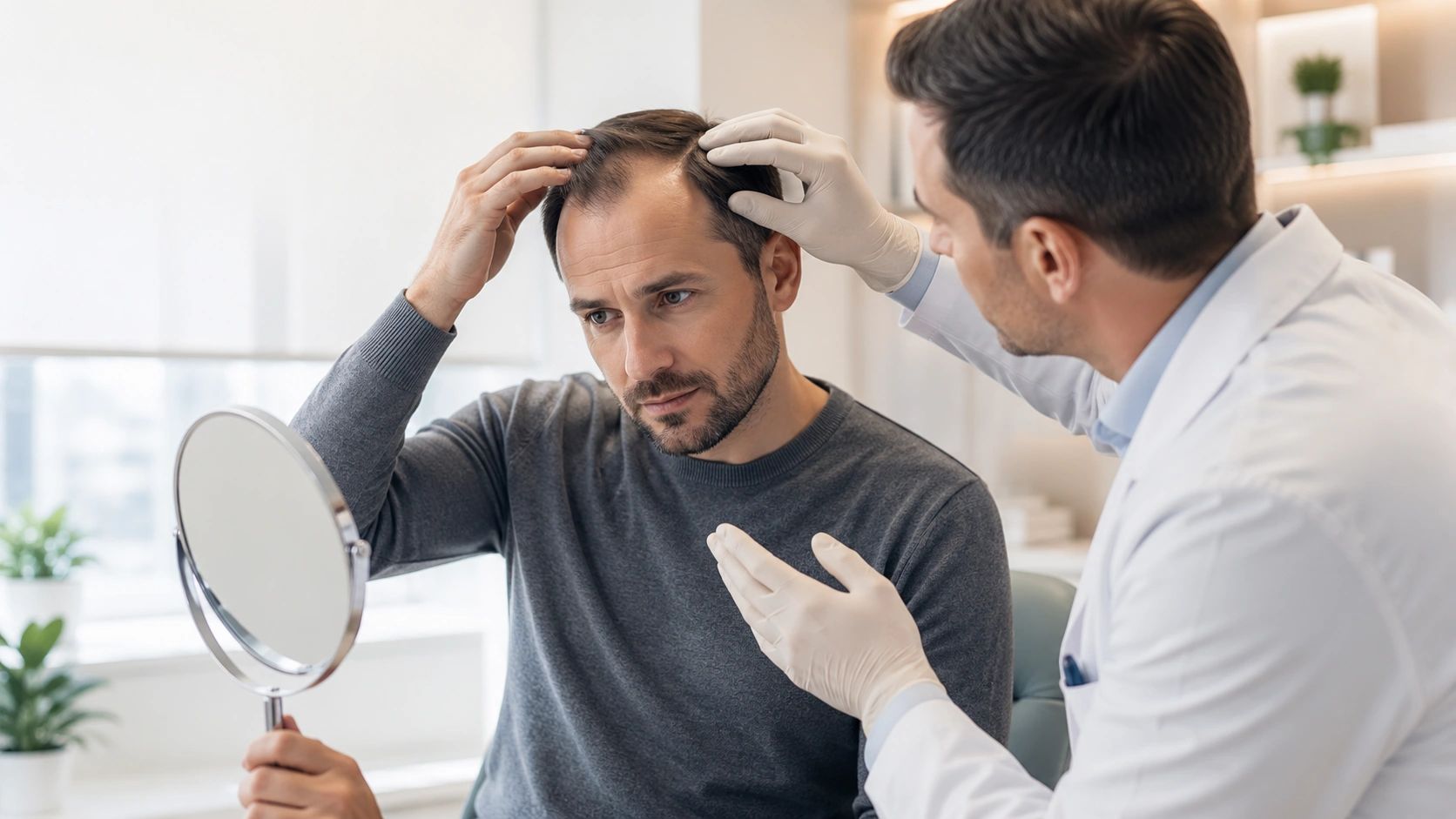
What is FUT?
Follicular unit transplantation (FUT), sometimes called strip harvesting, uses a narrow strip of donor scalp to obtain follicular units. The strip is divided into small grafts, which are placed into areas of thinning or hair loss. The donor area is closed and heals with a linear scar.
FUT and FUE are two ways to harvest donor hair. To determine the right choice for you, Dr. Agbai considers donor area quality, hair characteristics and long-term restoration goals.
Who may be a candidate?
Successful restoration starts with understanding why the hair is thinning. Your evaluation includes the diagnosis, current hair-loss activity, donor density, scalp health, hair caliber, curl pattern and expectations for coverage.
A suitable donor supply and stable hair loss are important. Patients with scarring alopecia require particular care: Active inflammation must be addressed before surgery is considered, and continued medical follow-up remains important afterward.
Planning for the long term
The surgical plan balances the area to be restored with the donor hair available now and in the future. FUT may be considered when the number of grafts required and the characteristics of the donor scalp make strip harvesting appropriate.
Hairline design, graft distribution and the angle and direction of the implanted hair all contribute to the appearance of the result. Transplantation moves existing follicles; it does not create an unlimited supply of new hair.
Recovery and ongoing care
The team provides instructions for care of the donor incision and transplanted area, follow-up appointments and return to activities. Transplanted hairs may shed before new growth becomes visible over the following months. Results develop gradually and vary among patients.
A linear donor scar is an important consideration when choosing FUT. Other surgical risks include bleeding, infection, anesthetic reactions and grafts that do not grow as expected. We discuss healing, hairstyle preferences and realistic coverage during the consultation.
Medical treatment may still be needed to stabilize ongoing loss and protect hair that has not been transplanted.
Start with an evaluation
A consultation helps determine whether FUT, FUE or a non-surgical approach fits your needs. Call (916) 571-5200 to discuss the next step.