Male and female pattern hair loss
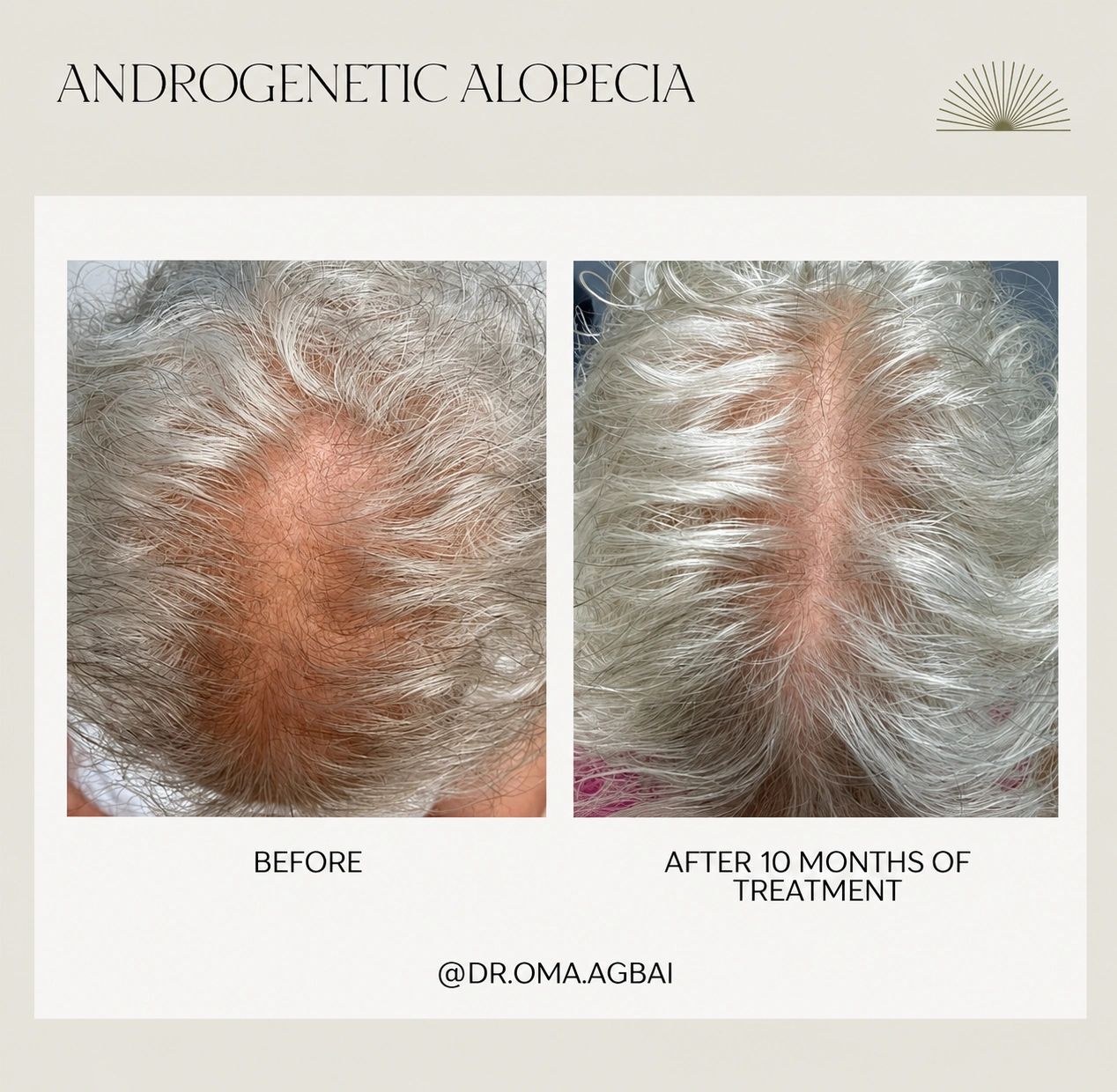
Androgenetic alopecia (AGA), also called male pattern hair loss and female pattern hair loss, is the most common cause of hair thinning worldwide. It is a genetically influenced, hormone-sensitive condition characterized by progressive miniaturization of hair follicles, leading to thinner, shorter, and less pigmented hairs over time.
Unlike scarring alopecia, androgenetic alopecia does not destroy the hair follicle. The follicle remains alive, which means meaningful regrowth is often possible with appropriate treatment.
This condition affects both men and women, though the pattern, timing and psychological impact can differ significantly between sexes.
What causes androgenetic alopecia?
Androgenetic alopecia is a multifactorial condition driven by a combination of genetics, androgens and follicular sensitivity.
Genetic susceptibility
AGA is highly heritable. Multiple genes contribute to risk, including those involved in:
Androgen receptor sensitivity
Hair follicle cycling regulation
Local scalp hormone metabolism
A family history of hair loss on either side of the family increases risk, though inheritance is polygenic rather than following a simple pattern.
Androgen influence and DHT sensitivity
The central hormonal driver is dihydrotestosterone (DHT), a metabolite of testosterone produced by five alpha reductase enzymes in the scalp.
In genetically susceptible follicles:
DHT binds to androgen receptors.
It shortens the anagen (growth) phase.
It progressively miniaturizes terminal hairs into vellus-like hairs.
Importantly, individuals with AGA do not necessarily have higher systemic androgen levels. The key issue is follicular sensitivity.
Follicular miniaturization and cycle alteration
Over time, affected follicles:
produce thinner hairs
spend less time in the growth phase
spend more time in shedding and rest phases
eventually produce hairs that are barely visible
This process is gradual and often begins years before visible thinning is noticed.
Scalp inflammation and microenvironment changes
Recent research suggests low-grade perifollicular inflammation may contribute to progression in some patients. Proposed mechanisms include:
microbiome imbalance
oxidative stress
cytokine signaling around follicles
fibrotic signaling pathways in advanced disease
These findings are still being actively studied but may help explain variability in progression.
Contributing factors
While not primary causes, several factors may worsen or unmask AGA:
aging
chronic stress and illness (telogen effluvium overlap)
nutritional deficiencies such as low iron or vitamin D
rapid weight loss or systemic illness
certain medications
Male vs female pattern hair loss
Male pattern hair loss
Typically follows a well described pattern:
recession at the temples
thinning at the crown (vertex)
progression to partial or complete balding in advanced stages
Female pattern hair loss
Typically presents as:
diffuse thinning over the crown and mid scalp
preservation of the frontal hairline in most cases
widening of the part line
sometimes a “Christmas tree” pattern of central thinning
Women rarely develop complete baldness but may experience significant density reduction.
Symptoms of androgenetic alopecia
Common features include:
gradual thinning over years
increased scalp visibility
widening part line in women
receding hairline in men
increased shedding in early stages
reduced ponytail volume
Most patients do not have scalp pain or inflammation, which helps distinguish AGA from scarring alopecia.
How androgenetic alopecia is diagnosed
Clinical examination
Diagnosis is primarily clinical, based on pattern recognition and scalp examination.
Trichoscopy
Dermoscopic findings may include:
hair shaft diameter variability
miniaturized hairs
peripilar signs in some cases
increased proportion of vellus hairs
Pull test and hair density assessment
These can help assess active shedding versus chronic thinning.
Laboratory testing
Lab tests are not always required but may be used to rule out other contributors:
Iron studies (ferritin)
Thyroid function
Vitamin D
Androgen levels in selected cases
Scalp biopsy
Rarely needed but may be used if diagnosis is unclear or to differentiate from chronic telogen effluvium or early scarring alopecia.
Treatment goals
Treatment of androgenetic alopecia focuses on:
slowing or stopping progression
increasing hair shaft diameter
reactivating miniaturized follicles
improving cosmetic density
supporting long-term maintenance
Early treatment tends to produce better outcomes because miniaturization is more reversible in early stages.
Evidence-based treatments for androgenetic alopecia
Most effective treatment plans involve combination therapy.
Topical Minoxidil
Minoxidil is a first-line therapy for both men and women.
Mechanism:
prolongs anagen phase
increases follicle size
improves hair shaft thickness
Available as:
foam or solution
typically used once or twice daily depending on formulation
Initial shedding can occur as follicles shift into synchronized growth phases, which is temporary.
Oral minoxidil (low-dose)
Low-dose oral minoxidil is increasingly used off label for both men and women.
Potential benefits:
improved adherence compared to topical therapy
systemic stimulation of hair growth
effective in diffuse thinning
Side effects may include:
hypertrichosis
mild fluid retention
rare cardiovascular effects in susceptible patients
It is generally well tolerated when appropriately dosed and monitored.
5 Alpha reductase inhibitors
Finasteride (primarily men)
Finasteride reduces conversion of testosterone to DHT.
Effects:
slows hair loss progression
improves hair density in many patients
works best when started early
Dutasteride
Dutasteride blocks multiple forms of 5 alpha reductase and is generally more potent than finasteride.
It is sometimes used off label in men and selected women under specialist supervision.
Female Use Considerations
In women, anti-androgen therapy may include:
Spironolactone
Finasteride (selected cases, postmenopausal or with contraception)
These require an individualized risk benefit assessment.
Anti-androgen therapies (women)
Spironolactone
Spironolactone reduces androgen signaling at the follicle.
Benefits:
reduces shedding
improves density over time in some patients
Monitoring is required for potassium levels and blood pressure in some patients.
Adjunctive therapies
Ketoconazole shampoo
May reduce scalp inflammation and yeast related irritation. Sometimes used as an adjunct in both men and women.
Low-level laser therapy
Devices using red light may stimulate follicular activity and improve hair density modestly.
Microneedling
May enhance topical minoxidil absorption and stimulate growth factor signaling.
Emerging and investigational therapies
Research continues into:
JAK inhibitors (limited role in AGA compared to alopecia areata)
Wnt pathway modulation
Prostaglandin analogs
Novel topical anti androgens
Stem cell based therapies
These remain investigational but are active areas of study.
Hair transplantation
Hair transplantation can be highly effective in appropriate candidates.
Key principles:
Donor follicles are typically resistant to DHT.
Best results occur when medical therapy stabilizes ongoing loss.
Ongoing medical treatment is usually needed to preserve non-transplanted hair.
Can androgenetic alopecia be reversed?
Early miniaturization can often be improved significantly.
Long-standing follicle miniaturization may have partial or limited reversibility.
Completely inactive follicles may not respond fully.
Treatment success depends heavily on timing and consistency.
When to see a dermatologist
Evaluation is recommended if there is:
gradual thinning over time
widening part line
receding hairline
reduced hair density or volume
family history of patterned hair loss
Early intervention can significantly improve long term outcomes.
Talk with Dr. Agbai
A medical evaluation with NorCal Hair Doctor™ helps determine which treatments fit your diagnosis. Some treatments discussed above are off-label or emerging and require an individual assessment of evidence, benefits and risks.
Request a consultation or call (916) 571-5200.