By Oma Agbai, MD, FAAD | Board-Certified Dermatologist | NorCal Hair Doctor™
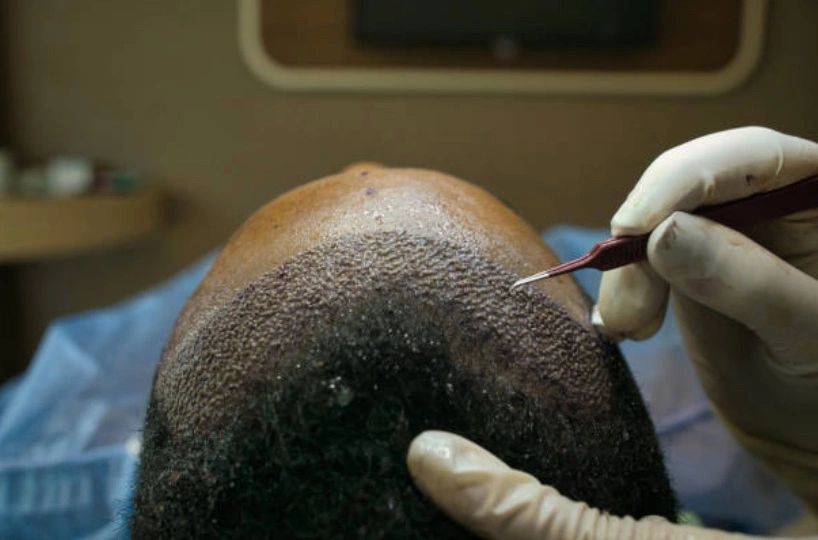
Hair transplantation has evolved into a highly refined, evidence-based procedure capable of producing natural, long-lasting results. With proper diagnosis and medical stabilization, even patients with complex hair loss conditions may be candidates. Success depends not only on technique, but on thoughtful planning and long-term strategy.
A procedure that has quietly transformed Hair transplantation has undergone a remarkable evolution.
What was once associated with unnatural results is now a highly refined procedure centered on precision, artistry and long-term outcomes. The goal today is not simply to replace hair, but to restore it in a way that remains natural over time.
Understanding the techniques: FUE and FUT
Follicular Unit Extraction (FUE)
individual follicular units are extracted one by one
no linear scar
faster recovery
greater flexibility with shorter hairstyles
Follicular Unit Transplantation (FUT)
a small strip of scalp is removed and dissected into grafts
allows for a higher number of grafts in a single session
may be preferred when maximizing density
The choice between these approaches depends on:
donor area quality
hair characteristics
long-term restoration goals
Why diagnosis comes first: hair transplantation is not the first step. It is the final step.
Before surgery, it is essential to:
establish an accurate diagnosis
stabilize the underlying condition
understand long-term hair loss progression
Without this foundation, even technically excellent procedures may not yield durable results.
Who can be a candidate? Hair transplantation is often associated with androgenetic alopecia, but candidacy extends beyond that.
With appropriate medical management and stabilization, patients with:
androgenetic alopecia
fibrosing alopecia in a pattern distribution
Central Centrifugal Cicatricial Alopecia (CCCA)
lichen planopilaris
may also be considered for transplantation.
A key requirement is disease stability, typically for at least 6 months on medical therapy.
Scarring alopecia and transplantation: A shift in thinking Scarring alopecia has historically been viewed as a contraindication to hair transplantation.
That perspective is evolving.
Emerging literature suggests that in well-selected patients with controlled disease, graft survival can be high, in some studies approaching 70% to 80% several years after transplantation.
This expands the possibility of restoration for patients who were previously told it was not an option.
The key remains careful patient selection, stabilization and ongoing medical management.
What determines a natural result Technique alone does not determine success.
The most important factor is planning.
A thoughtful approach considers:
hairline design appropriate for age and facial structure
density distribution
donor and recipient balance
anticipated future hair loss
Hair transplantation is not about recreating the past. It is about designing a result that will continue to look natural over time.
What patients can expect Hair transplantation is typically performed in a single session, though some patients may require more than one procedure.
After the procedure:
transplanted hairs shed within a few weeks
new growth begins over several months
noticeable improvements develop gradually over 6 to 12 months
Results are long-lasting, particularly when supported by ongoing medical therapy.
The role of a comprehensive approach Hair transplantation is most successful when it is part of a broader, integrated strategy.
This may include:
medical therapy to stabilize hair loss
adjunctive treatments such as PRP or exosomes
long-term follow-up and maintenance
A comprehensive approach allows for better timing, better outcomes and more predictable results.
A more complete model of care For many patients, the challenge has not been access to procedures, but access to coordinated care.
An integrated approach that connects diagnosis, medical treatment, and restoration allows for:
more accurate patient selection
improved graft survival
more natural, long-term outcomes
Hair restoration is not a single decision. It is a sequence of decisions made thoughtfully over time.
The takeaway Hair transplantation, when approached with precision and intention, is one of the most effective tools in hair restoration.
Its success depends not only on surgical technique, but on timing, diagnosis and long-term planning.
With the right approach, it offers not just regrowth, but restoration in the fullest sense. For patients considering hair transplantation, the most important step is not the surgery itself, but the evaluation that precedes it. A comprehensive consultation with NorCal Hair Doctor™ allows for careful assessment of diagnosis, stability, and long-term goals, ensuring that any decision to proceed is both appropriate and strategically timed. When approached in this way, hair transplantation becomes less about intervention and more about restoration, guided by expertise and designed to endure.