By Oma Agbai, MD, FAAD | Board-Certified Dermatologist | NorCal Hair Doctor™
Exosome therapy is an emerging, science-driven approach to hair restoration that uses cellular signaling molecules to stimulate follicle activity and support healthier hair growth. By activating pathways like the Wnt/β-catenin signaling pathway, it offers a promising, regenerative option that can complement traditional treatments for patients seeking a more comprehensive strategy.
A shift in how we think about hair growth Hair loss has always occupied a unique space in medicine, where biology and identity intersect.
For decades, most treatments have focused on prolonging the growth phase of the hair cycle or modifying hormonal pathways. Exosome therapy introduces a different approach. Rather than forcing change, it works by delivering signals that help restore communication within the follicle.
What are exosomes? Exosomes are microscopic extracellular vesicles released by cells. Once thought to be cellular debris, they are now understood to play a key role in communication between cells.
They carry bioactive molecules such as:
growth factors
proteins
lipids
microRNAs
These signals influence how surrounding cells behave, including those within the hair follicle.
How exosomes support hair growth Hair follicles are dynamic structures that cycle through growth, regression and rest. These transitions are controlled by complex signaling pathways.
Preclinical studies suggest exosomes may activate pathways involved in hair growth, including:
Wnt/β-catenin signaling
VEGF signaling
PI3K/AKT signaling
At the center of this process is the dermal papilla, often described as the control center of the follicle. Exosomes appear to stimulate these cells, helping restore activity in follicles that may have become less active over time.
What treatment looks like In clinical practice, exosome therapy is often delivered as a topical or in-office treatment.
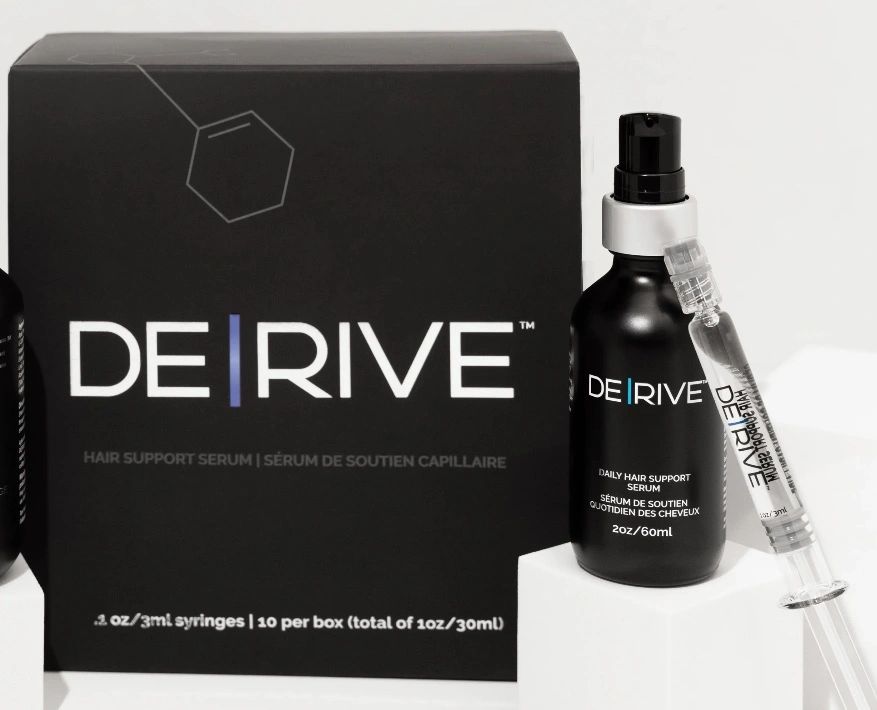
Platforms such as De|Rive Hair Wellness may be used, often in combination with microneedling to enhance delivery.
Patients are often drawn to this option because it is:
non-invasive
well tolerated
associated with minimal to no downtime
What patients may notice While research is still evolving, early clinical data and patient experience suggest improvements in:
hair density
hair thickness
overall scalp health
reduced shedding
improved hair quality
Results tend to be gradual and are best understood as part of a broader treatment strategy rather than a standalone solution.
Who may benefit Exosome therapy may be considered for patients with:
androgenetic alopecia
Early-stage thinning
Inflammatory scalp conditions such as medically-controlled scarring alopecia
Patients seeking non-invasive adjunctive therapy
It can also be a thoughtful option for patients who are not yet ready for procedural treatments.
The bigger picture Exosome therapy reflects a broader shift toward regenerative medicine, working with the body’s biology rather than against it.
When integrated thoughtfully with medical therapy, PRP, or surgical restoration, it can enhance outcomes and expand what is possible in hair restoration.
For those beginning to notice changes in their hair, the next step does not have to feel uncertain. The most effective treatments are not chosen in isolation, but as part of a thoughtful, individualized plan grounded in diagnosis and long-term strategy. Exosome therapy may be one piece of that plan, offering a modern, regenerative approach for patients seeking to support and enhance their results. A consultation with NorCal Hair Doctor™ provides the opportunity to understand what is happening beneath the surface and to explore options that are both medically sound and aligned with your goals.