By Oma Agbai, MD, FAAD | Board-Certified Dermatologist | NorCal Hair Doctor™
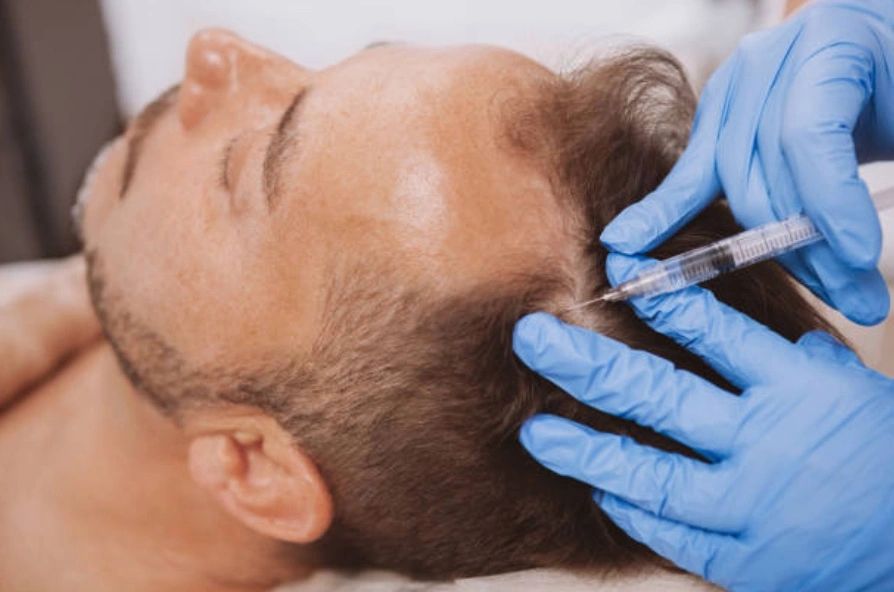
Platelet-rich plasma (PRP) is gaining attention as a natural, non-surgical option for hair loss, using your body’s own growth factors to support healthier hair growth. This article explores how PRP works, who may benefit most, and what kind of results to realistically expect over time. While not a one-size-fits-all solution, PRP can be a valuable part of a comprehensive, personalized approach to hair restoration.
Platelet-rich plasma for hair loss is everywhere right now. But does it actually work?
Hair loss has a way of appearing quietly. A little more hair left behind in the brush. A part that looks slightly wider in certain lighting. For many, it builds gradually, until one day it feels harder to ignore.
At the same time, treatments for hair loss have become more visible and more talked about than ever. Among them, platelet-rich plasma, or PRP, has gained attention as a natural, non-surgical option that uses the body’s own biology to support hair growth.
But what is PRP exactly, and who is it really for?
A treatment rooted in your own biology
PRP begins with something simple: a small sample of your blood. That sample is processed to concentrate platelets, which are rich in growth factors known to support healing and tissue repair.
When injected into the scalp, PRP delivers those growth factors directly to the level of the hair follicle. The goal is not to create something artificial, but to encourage the follicle to function more optimally, supporting thicker, healthier hair over time.
Why the hair growth cycle matters
Hair does not grow continuously. Each strand cycles through phases of growth, rest, and shedding. In many common forms of hair loss, including pattern hair loss, that cycle becomes disrupted. Follicles may spend less time in the growth phase, and the hairs that do grow can become finer and less dense.
PRP is thought to help by nudging follicles back toward the growth phase and improving the overall environment of the scalp.
Patients often notice gradual changes, including:
subtle increases in hair thickness
improved density over time
healthier-appearing hair overall
The shift is rarely dramatic overnight, but rather progressive and cumulative.
Who tends to benefit most
PRP is not a universal solution, and it is not meant to replace a proper diagnosis. It tends to be most effective in earlier stages of hair thinning, when follicles are still active but need support.
It is commonly used for both men and women experiencing pattern hair loss, as well as for individuals who want to enhance the results of other treatments.
In some cases, it may also play a role in managing certain inflammatory or scarring conditions, though outcomes can vary.
What the experience is like
Part of PRP’s appeal is its simplicity. Treatments are performed in the office and typically take less than an hour.
The process includes a blood draw, preparation of the platelet-rich plasma and a series of targeted injections into the scalp. Most patients find it very tolerable, and there is little to no downtime afterward.
A series of treatments is usually recommended, often spaced about a month apart at the beginning, followed by maintenance sessions over time.
The timeline patients should expect
PRP works with the body’s natural hair cycle, which means results take time.
Early changes may begin within a few months, with more noticeable improvements in thickness and density developing gradually. For many patients, the most meaningful results are seen after completing a full series of treatments.
The bigger picture
Perhaps the most important point is that hair loss is rarely one-size-fits-all. The most effective approach is one that begins with understanding the underlying cause and building a treatment plan around it.
PRP can be a powerful tool, but it is often just one part of a broader strategy that may include medical therapy or other forms of hair restoration.
A thoughtful first step
For those beginning to notice changes in their hair, the next step does not have to be overwhelming. A consultation with NorCal Hair Doctor™ can provide clarity on what is happening and what options are worth considering.
With the right approach, hair restoration becomes less about chasing trends and more about making informed, personalized decisions that support long-term results.